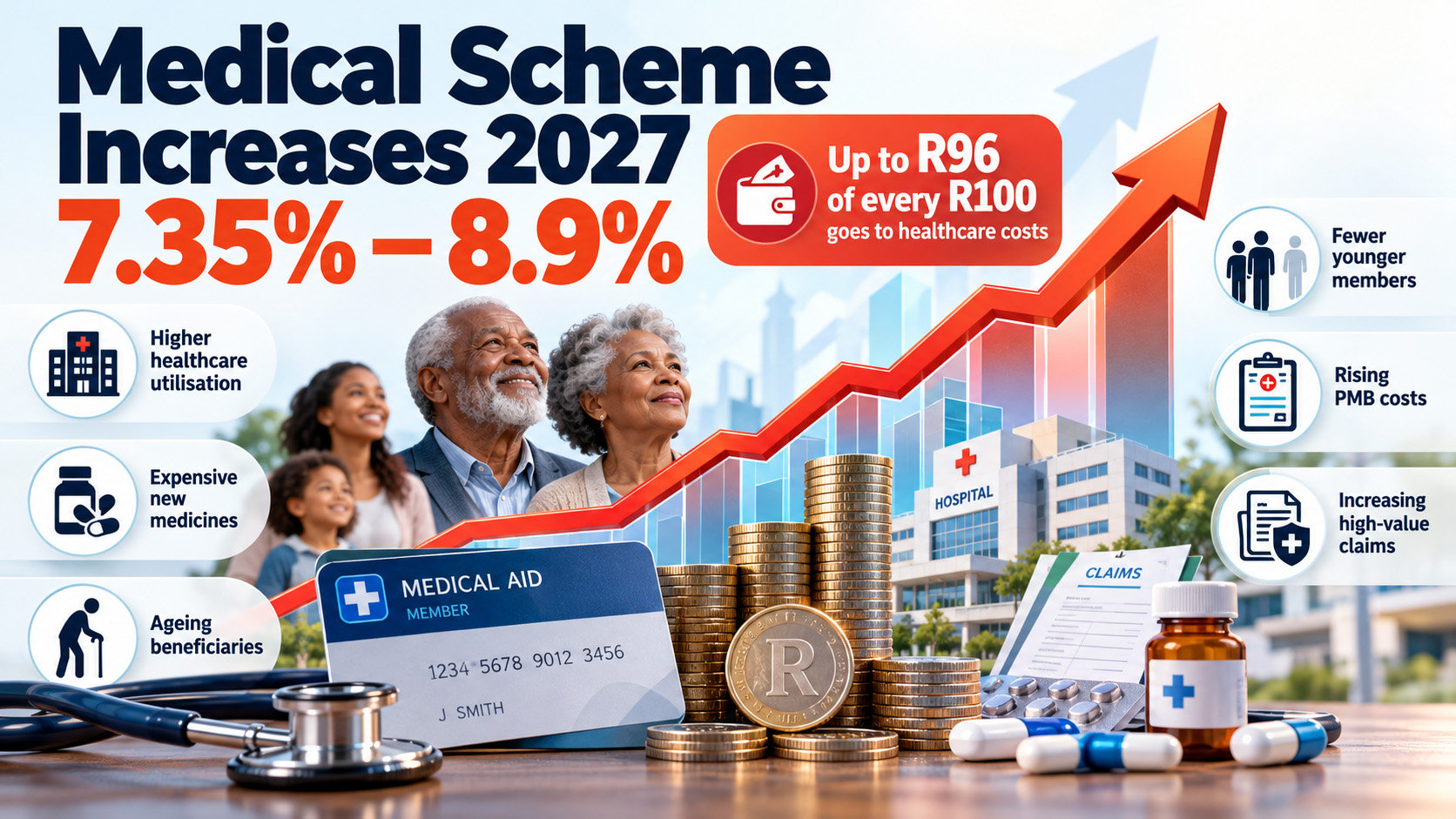
Medical scheme increases for 2027 range from 7.35% to 8.9%, as rising healthcare utilisation, ageing membership and expensive new treatments continue to push costs above inflation. Industry representatives say schemes must raise contributions to cover growing claims expenditure. According to the Council for Medical Schemes (CMS), healthcare costs can absorb up to R96 of every R100 contributed. Why Medical Scheme…
Tag: BHF
-
NHI Funding: Court Hears Claims Of Blind NHI Approval
The National Health Insurance (NHI) programme faced renewed legal pressure yesterday. Constitutional Court justices questioned whether the public had enough information to participate meaningfully in the law-making process. At the centre of the dispute is NHI Funding Transparency. Debate continues over whether Parliament should have provided clearer cost and funding details before passing the bill. The NHI Act aims to…
-
NHI ConCourt Challenge: What’s At Stake For The Health System
South Africa’s National Health Insurance Act is one of the most ambitious legislative reforms since democracy’s advent. Its goal, universal health coverage, is widely supported. But ambition alone does not make legislation constitutional, and the upcoming NHI ConCourt Challenge will test this. The Board of Healthcare Funders (BHF) will appear before the Constitutional Court from 5 to 7 May. Its…
-
Medical Scheme Increases Amidst Regulatory Concerns
For millions of South Africans grappling with the rising cost of living, the announcement that medical scheme contribution increases for 2026 will largely remain within single digits offers a welcome reprieve. However, industry experts warn that these restrained figures mask a precarious financial reality. 2026 Medical Scheme Contribution Increases: Top 5 Open Schemes Medical SchemeWeighted Average IncreaseEffective DateKey NotesBestmed6.8%1 January…
-
BHF Seeks Clarity for Medical Tax Credit Changes
The Board of Healthcare Funders (BHF) has written to Treasury director-general Duncan Pieterse, demanding “urgent clarity” on the government’s plans to phase out medical scheme tax credits. These credits serve as a financing mechanism for the National Health Insurance (NHI), a controversial initiative. In light of this, BHF seeks clarity on how these changes will impact the healthcare funding landscape.…
-
BHF’s NHI Legal Challenge and Its Implications for UHC
South Africa’s NHI Act faces a major legal challenge. The Board of Healthcare Funders’ (BHF) NHI legal challenge argues that the law is unconstitutional and unworkable. This move adds uncertainty to the landmark law. It aims for universal health coverage (UHC). Critics note its lack of a clear funding model. The BHF supports UHC’s goal. However, they consider the current…
-
Constitutional Court challenge to NHI Act by BHF
The legal storm surrounding the National Health Insurance (NHI) Act has intensified. The Board of Healthcare Funders (BHF) launches a direct challenge in the Constitutional Court. They are targeting the very process Parliament followed in passing the controversial legislation. This is part of the broader Constitutional Court challenge to the NHI Act. This new legal assault extends beyond the content…
-
BHF Challenges NHI Act Over Public Consultation Flaws
The Board of Healthcare Funders (BHF) has intensified its opposition to the National Health Insurance (NHI) Act. It has launched a direct legal bid to the Constitutional Court to have the controversial legislation declared unlawful and invalid. The BHF challenges the NHI Act, contending that Parliament failed to fulfil its constitutional duty by conducting an improper public consultation process. This…
-
Medical schemes facing ‘slow death spiral’ amid regulatory failures
South Africa’s medical scheme industry is at a critical juncture, with escalating regulatory failures forcing schemes to design options that include gaps in cover. This trend increasingly requires members to purchase supplementary insurance, such as primary healthcare plans or gap cover. Consequently, this pushes consumers to pay for cover based more closely on their health risks. This was a key…