
Rare disease funding is under scrutiny after the Council for Medical Schemes (CMS) Appeals Committee ordered KeyHealth to cover a teenager’s treatment in full. The Board of Healthcare Funders (BHF) says the case shows why schemes need a way to share the cost of exceptionally expensive treatments. The 15-year-old has paroxysmal nocturnal haemoglobinuria, a rare blood disorder. Treatment with AstraZeneca’s…
Tag: Prescribed Minimum Benefits
-
KeyHealth Ordered to Fully Fund Teenager’s Rare-Disease Treatment
A KeyHealth PMB ruling requires the medical scheme to fund a teenager’s rare blood disorder treatment in full, without membership conditions. The Council for Medical Schemes (CMS) appeals committee issued its decision on 29 October. However, KeyHealth has notified the registrar that it intends to appeal to the CMS appeals board. The case involves a 15-year-old with paroxysmal nocturnal haemoglobinuria,…
-
Six Factors Driving Medical Scheme Increases in 2027
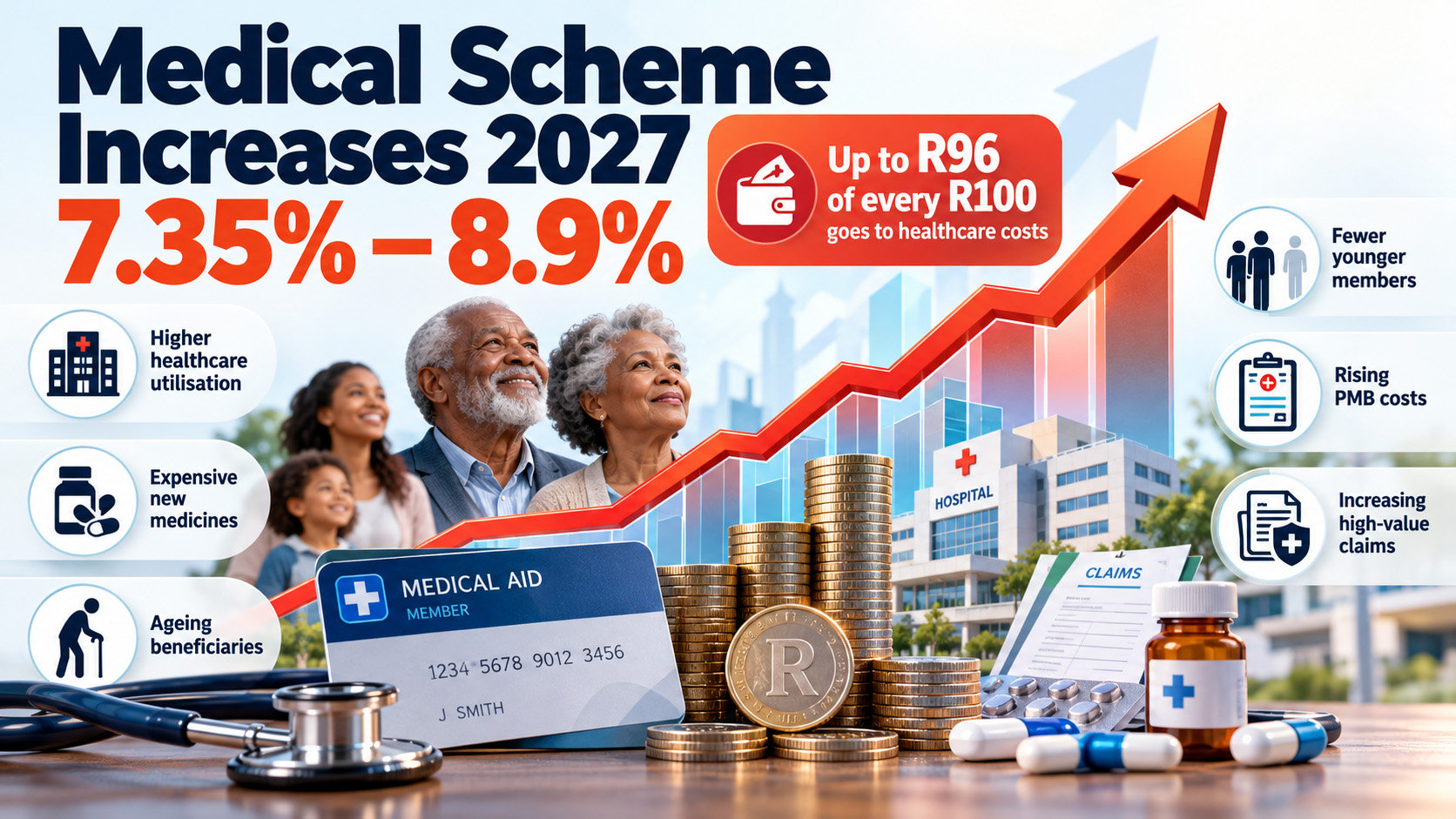
Medical scheme increases for 2027 range from 7.35% to 8.9%, as rising healthcare utilisation, ageing membership and expensive new treatments continue to push costs above inflation. Industry representatives say schemes must raise contributions to cover growing claims expenditure. According to the Council for Medical Schemes (CMS), healthcare costs can absorb up to R96 of every R100 contributed. Why Medical Scheme…
-

Gap Cover Undermines Scheme Cost Controls
Gap cover, medical schemes and primary healthcare plans are shifting costs between one another, undermining efforts to contain healthcare spending, actuaries have warned. Four Medscheme actuaries presented the findings at the Actuarial Society of South Africa convention in Cape Town. PMBs squeeze other benefits According to senior actuarial analyst Elizabeth Greyling, prescribed minimum benefits (PMBs) accounted for 70% of healthcare…
-
Medical Aid Contributions: 3.8% Target Won’t Fix Affordability
A 3.8% guideline for 2027 medical aid contributions will not make private healthcare more affordable, the Board of Healthcare Funders (BHF) says. Instead, managing director Dr Katlego Mothudi says structural reforms are needed to tackle rising hospital and specialist costs and higher utilisation. Unexplained component in the 2027 guideline Speaking in a broadcast interview, Mothudi said the main problem lies…
-
Medical scheme contributions: BHF challenges CMS
Medical scheme contributions for 2027 have become a point of contention between the Board of Healthcare Funders (BHF) and the Council for Medical Schemes (CMS). The BHF has challenged the regulator’s guidance that schemes anchor next year’s contribution increases at 3.8%. It argues that the figure does not adequately reflect the cost pressures facing the industry. The association represents schemes…
-
Gap Cover Gains Importance as Costs Rise
Medical aid remains central to accessing private healthcare in South Africa, but members can no longer assume it will cover the full cost of treatment. In 2026, increases in medical scheme contributions have continued to put household budgets under pressure. Healthcare cost inflation is also running well above consumer inflation, while many scheme options have introduced more co-payments, sub-limits and…
-
Healthcare Funding Hiatus Forces A Harder NHI Conversation
South Africa’s healthcare debate is changing. With the National Health Insurance (NHI) Act stuck in legal processes and no clear healthcare funding pathway emerging from the 2026 Budget, the focus is moving from big promises to a tougher, present-day question: how do we fund care now, and what trade-offs will the system accept? That shift puts medical schemes back at…